KnowEdge Publishing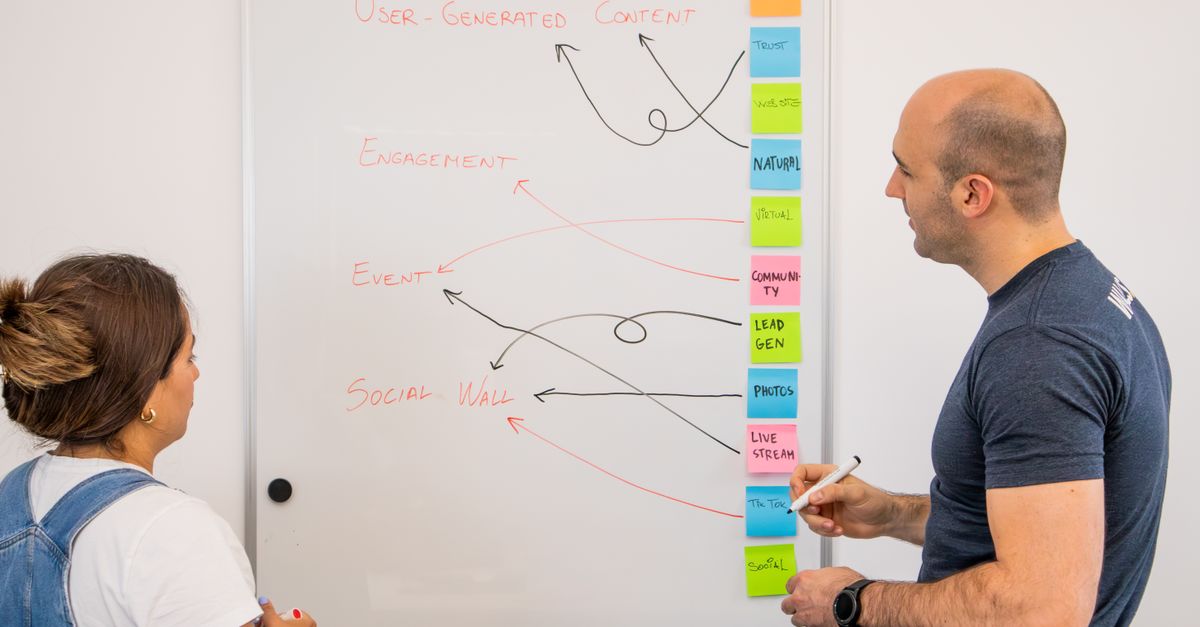
Ask most teams to automate a business process with AI and they'll start by talking about tools -- which model, which platform, which integration. Ask them to describe the actual process being automated, step by step, in the order it really happens, and things get shakier fast. That gap is the real reason so many AI automation projects underdeliver: not the technology, but a fuzzy or simply wrong understanding of the process being handed to it.
Why "we know our process" is usually only half true
Every team has a version of their process that lives in their head -- the clean, idealized version they'd describe if you asked them to explain it in a meeting. That version is almost never identical to what actually happens day to day, because real processes accumulate exceptions, workarounds, and undocumented judgment calls that nobody thinks to mention because they're too obvious to the person doing them.
A concrete example: a company decides to automate its invoice-approval process. The documented version is "invoice arrives, manager approves, finance pays it." The real version, uncovered only by actually watching it happen, is "invoice arrives, and if it's under $500 the manager approves without checking anything, if it's over $500 they cross-reference it against the PO, if the vendor is new they also loop in procurement, and if it's the end of the fiscal quarter they hold it for a separate budget review regardless of amount." An automation built against the documented version breaks immediately on the exceptions nobody wrote down.
The mapping method that actually surfaces exceptions
The reliable way to get past the idealized version is to trace real, completed instances of the process -- not to ask someone to describe it from memory. Pull five to ten recent, real examples (five completed invoices, five recent customer support tickets, five recent hiring decisions -- whatever the process is) and walk through each one asking: what happened here, in what order, and why. The "why" matters most, because it's where the hidden logic lives -- the answer to "why did this one get escalated" is exactly the exception a memory-based description would skip.
Write this down as a simple sequence, not a formal flowchart with special notation -- the format doesn't matter, catching the real steps does. For each decision point, note what determined which branch was taken. By the time you've traced five to ten real examples, patterns emerge: which exceptions are common enough to matter, and which happened once and aren't worth building for yet.
Tip
If tracing real examples surfaces a decision point where the answer is "it depends who's handling it that day," you haven't found an automation opportunity yet -- you've found an undocumented judgment call that needs a real, explicit rule before anything can be automated around it. Automating an inconsistency just makes the inconsistency faster and harder to notice.
Separate the parts that are actually decisions from the parts that are just work
Once a process is mapped, sort each step into one of two categories: mechanical steps (gathering information, formatting, moving data from one place to another -- work that doesn't require judgment) and decision steps (approving, escalating, prioritizing -- steps where a person is actually weighing something). This distinction determines where AI adds value safely versus where it needs much more caution.
Mechanical steps are usually the easiest, highest-value first target for automation -- low risk, because there's no real judgment call to get wrong, just labor to save. Decision steps are where the earlier discussion of risk tiers and human checkpoints applies directly: a decision step can still be AI-assisted (draft a recommendation, surface the relevant facts), but replacing the actual judgment call outright is a much bigger step that deserves the scrutiny a high-risk use case warrants, not something to default into because the mapping exercise made it look mechanical on paper.
The map tells you the automation's real boundaries
A completed process map should make it obvious where an automation's boundaries belong -- which is usually narrower than the whole end-to-end process. In the invoice example, the mechanical steps (extracting invoice data, checking it against the PO, flagging amount thresholds) are strong automation candidates. The actual approval decision for anything above the simple threshold, and anything involving a new vendor, are exactly the boundaries a first automation should stop at and hand back to a human -- not because AI categorically can't help there, but because that's where the real judgment and risk concentrate, and a first automation earns trust by handling the mechanical majority correctly before anyone extends it into the harder cases.
What goes wrong when this step gets skipped
Skipping process mapping doesn't usually produce an automation that fails outright on day one -- it produces one that works fine on the common cases and fails silently on the exceptions, which is worse, because nobody notices until the exception has already caused a real problem: an invoice paid without the required procurement review, a customer escalation that should have gone to a manager and didn't. The failure is invisible exactly in the cases that mattered most to catch.
This is also why "we'll just watch it in production and fix issues as they come up" is a weaker substitute for mapping first, not an equivalent alternative -- production issues surface as customer complaints or financial discrepancies, which is a much more expensive way to discover the same exceptions that a week of tracing real historical examples would have surfaced for free, before anything customer-facing was at stake.
Mapping is cheap; skipping it is not
A real process-mapping pass -- tracing ten real examples, documenting the actual decision points and exceptions -- typically takes days, not weeks, and needs no special tooling beyond attention and a willingness to look at what actually happened rather than what should have happened. Compared to the cost of an automation project that ships, breaks on an undocumented exception, and has to be pulled back for rework, it's one of the highest-leverage steps in the entire automation process, and one of the most consistently skipped.
The AI-Powered Business Operating System treats this mapping step as foundational, not optional -- the book's own automation framework assumes a real process map exists before any layer of the AI operating stack gets built on top of it. If you're planning your first (or fifth) AI automation project and haven't traced real historical examples of the process yet, that's the actual next step, well before choosing a tool.